Art Meets Engineering: How to Decide on an Engagement Ring Design That Lasts
By Christel Davel, Owner & CAD Designer, Everallure Jewelry
Choosing an engagement ring is one of the most exciting (and perhaps daunting) purchasing decisions you’ll ever make. You're looking for a symbol of eternal love—something beautiful, unique, and deeply personal.
But as a jewelry CAD designer with over 20 years in the industry, I know a secret that generic guides miss: The perfect ring is a blend of Art and Engineering. The most crucial decisions often happen in the millimeters you don't initially see, ensuring the beauty of the design stands the test of time.
If you’re the partner buying the ring and seeking assurance that your investment is in quality craftsmanship, this guide is for you.
The Biggest Mistake to Avoid (From a Designer's Perspective)
Before we dive into design, let's address the most common and costly error: Ignoring the ring’s profile height and overall width balance.
Clients often fixate on the stone's size and the top view. However, a ring that sits too high will constantly catch on clothes and surfaces, and a band that is too thin will flex, bend, and weaken over time.
My Advice: Don't sacrifice structural integrity for a fraction of a millimeter of perceived daintiness. Prioritize wearability—comfort and durability—as the foundation of your design.
My 3-Step Framework: The P.A.C. Method
To guide you from initial idea to final design, I use a trusted, technical three-phase framework that Everallure Jewelry clients follow:
Step 1: P is for Profile & Practicality (The Engineering)
This first step is non-negotiable and addresses the durability of the ring based on the wearer's daily life.
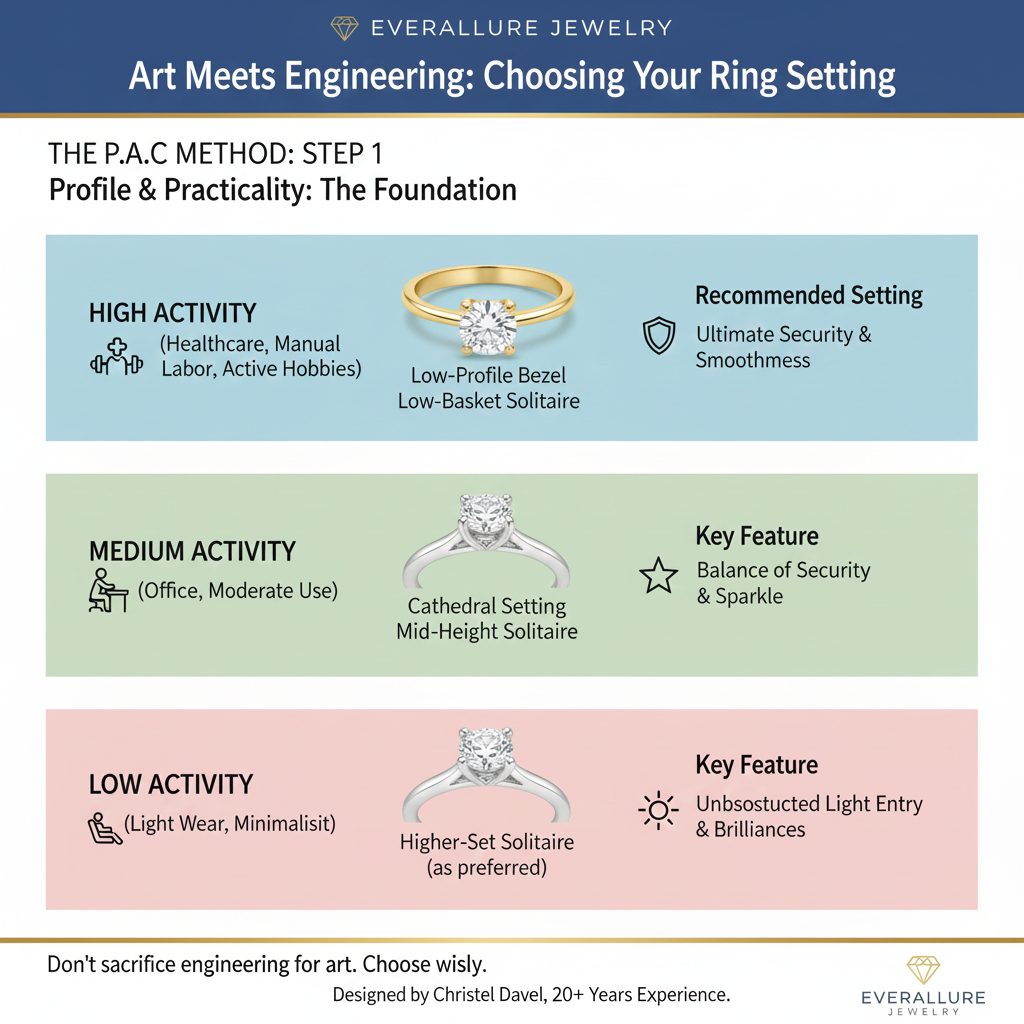
🔑 Overlooked Critical Design Element: Shank Thickness
Beyond the setting, pay attention to the band (shank). We maintain a minimum recommended width of 2.0 mm and a minimum thickness of 1.8 mm at the base. Why? This structural thickness prevents the band from warping, flexing, or becoming razor-thin and breaking after years of daily wear. Never skimp on the metal weight that provides the strength.
Step 2: A is for Aesthetics & Allure (The Art)
Now that we’ve secured the foundation, it’s time to define the look.
Center Stone Shape & Focus
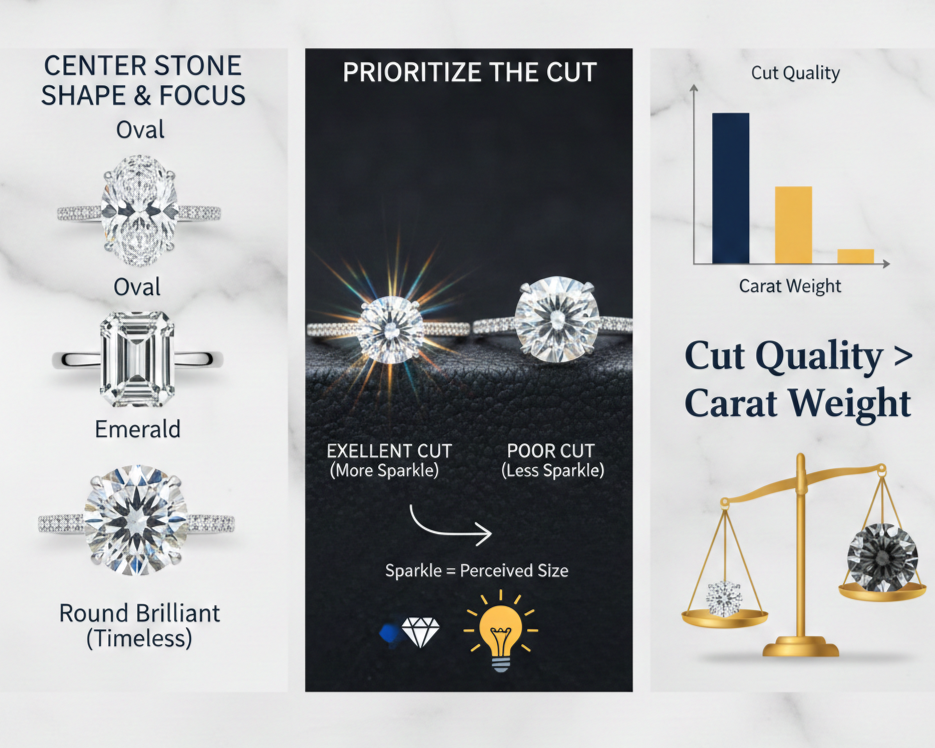
The Shape:
What shape best suits their hand and style? While Oval and Emerald cuts are trending, the Round Brilliant is eternally timeless.
Prioritize the Cut: When budgeting, always prioritize Cut Quality over Carat Weight. A smaller diamond with an Excellent Cut will reflect significantly more light and sparkle—the key to a diamond's beauty—than a larger diamond with a poor cut. Sparkle equals perceived size.
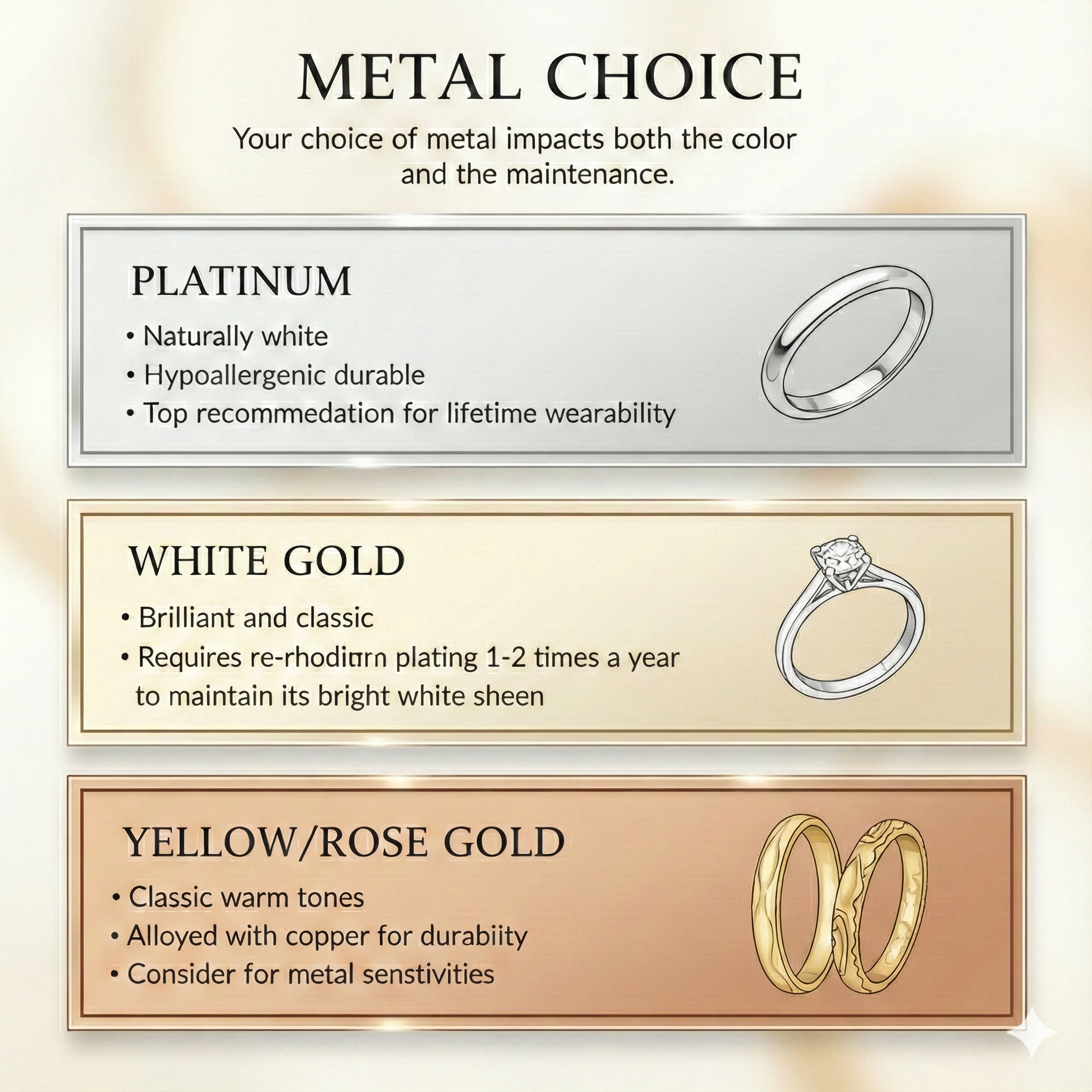
Metal Choice
Your choice of metal impacts both the color and the maintenance:
Platinum: Naturally white, hypoallergenic, and exceptionally durable. It's my top recommendation for lifetime wearability.
White Gold: Brilliant and classic, but it requires re-rhodium plating every few years to maintain its bright white sheen.
Yellow/Rose Gold: Classic warm tones. Rose gold is alloyed with copper, which provides durability but is something to consider for those with metal sensitivities.
Step 3: C is for Customization & CAD (The Finer Details)
This is the phase where your ring becomes truly unique and where my expertise as a CAD designer shines.
Prong Style: Do you want four or six prongs? Sharp Claw Prongs for an elegant finish, or durable Round Prongs for a secure hold?
Under-Gallery: The space beneath the stone can be designed as an open setting (more light, easier cleaning) or a smooth, closed gallery (more protection, sometimes vintage-inspired).
Adding Trends Safely: If a trendy feature, like a hidden halo, is desired, we can integrate it as an accent while keeping the main structural components classic and durable. CAD modeling allows us to show you exactly how a straight wedding band will sit flush (or not) next to the new design, preventing gaps and future headaches.
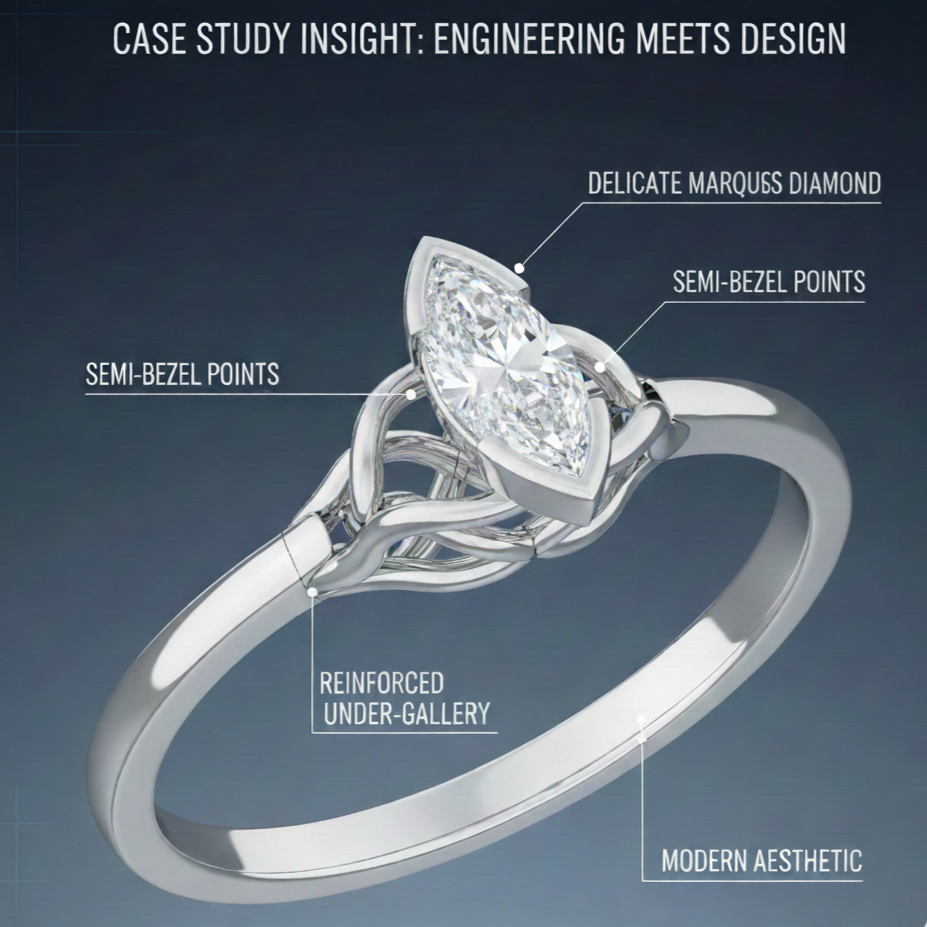
Case Study Insight:
I once helped a client secure a delicate, thin heirloom Marquise diamond by designing a custom semi-bezel setting on the fragile points, reinforced by a low, smooth under-gallery. The CAD visualization proved to the client that the stone would be safe and look modern—a testament to how engineering solves aesthetic concerns.
The Everallure Promise: Art Guided by Precision
Remember, your engagement ring is a beautiful piece of art, but it must be built like a finely tuned machine. By applying the P.A.C. Method and focusing on the crucial engineering details—like shank thickness and profile height—you ensure that the emotional investment you make today is matched by a physical design that truly lasts a lifetime.
The most stunning rings are the ones you never have to worry about.